

Residential relocation planning
A move is rarely as simple as loading the boxes, transporting them, and unloading. Especially for folks with many possessions over many years (collections, important documents and mementos, furniture, etc.), a move can entail dozens of important logistical and emotional decisions.
Relocation services coordinate all aspects of a move so the process is simplified and manageable, perfect for downsizing situations and/or senior moves.
A well-orchestrated move may include:
- Sorting and determining what goes where
- Floor planning in the new residence
- Coordinating movers/deliveries/timings/access, etc.
- Arranging donation, resale, recycling, and/or disposal for items no longer wanted/needed
- Packing and labeling belongings that should be accessible upon arrival
- Unpacking and setting up the most important areas first
Rather than making every decision for our clients, we strive to take as many as possible off their plate, especially the decisions that must be made in the moment during what can already be a stressful transition!
Planning the New Space Before Packing
Whether downsizing or not, it’s important to determine which pieces of furniture will fit in the new space before determining what you’ll be keeping! That dining table, sectional, or bedroom set may have fit just right in your last residence, but could feel cumbersome in your new floor plan.
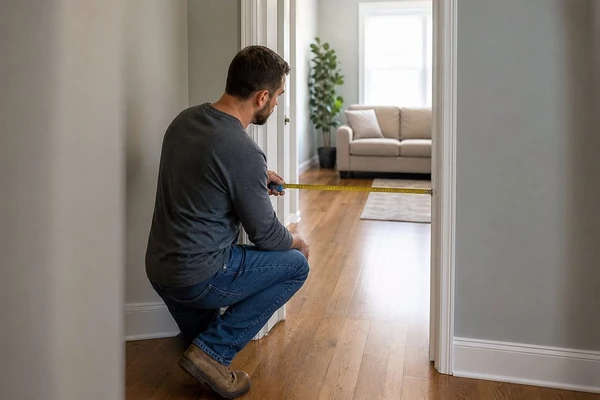
Furniture measurements and floor planning
Measure your larger furniture pieces and compare those measurements not only to the square footage of each room (I bookmarked www.britannica.com/science/area-measurement for this), but also hallways, doorways, elevators, etc. Consideration should also be given to turning space for large items.
Floor planning can help you to determine:
- Which furniture pieces are must-haves
- How best to organize necessities in each room
- Adequate walking space around furniture (i.e. bed, couch, etc.)
- Additional items that may need to be stored, delivered later, or possibly donated
This will also help you to avoid paying to move items that ultimately won’t be of much use in your new space!
Why Does Downsizing Feel So Complicated?
Downsizing is rarely as simple as it sounds. Between practicality, sentimentality, family history, etc., it’s easy to feel exhausted, and end up with buyer’s remorse (minus the buyer).
To make the process easier, try dividing the process up rather than taking everything on at once. Start with non-sentimental items first, like extra kitchenware, cleaning supplies, office supplies, linens, etc. Leave books, keepsakes, heirlooms, photos, and other sentimental items for another day.
Try breaking belongings down into the following categories:
- Belongings that will be moved to the new residence
- Items that will be given to friends/family
- Items to donate, recycle, sell, and/or dispose of
- Items to revisit later
Caution: category 4 should NOT end up being the largest category, or else you’ve merely stalled the process without actually simplifying anything!
Of course, all of this is overkill if you’re moving a smaller, sparsely-decorated space with limited items and plenty of time to organize, but for many households, a little relocation assistance can save many evenings and weekends spent packing, floor planning, and making decisions! For that practical route, the Tampa, FL Relocation Professionals page from Caring Transitions matches this.
Moving Day Runs on Coordination
Moving day can be much less stressful when thought of in terms of a series of hand-offs! Depending on your circumstances, this could include:
- Building access
- Reserved elevator
- Reserved parking/loading area
- Turning utilities on
- Picking up keys
- Delivery appointment(s)
Check with your new residence ahead of time to see if there are any special move-in considerations or procedures, including advance notice, restricted move-in days/times, etc. Elevator reservations are especially important to plan ahead of time!
Set aside an “essentials” box for personal transport instead of packing it up with the movers:
- Prescription medications
- Phone/laptop chargers
- Important documents
- ID
- Toiletries
- Change of clothes
- Basic tools
- Anything else you know you’ll need right away
Start unpacking with must-have living areas: bathroom, bedroom, kitchen, and a comfortable place to sit! Save unpacking the art, knick-knacks, and less essential items for later.
Make reconnecting the essentials easier. Take photos of the backs of your electronics and appliances and label the cords using tape labels to match. Keep remotes, manuals, and router equipment together in one labeled bin. These simple steps can help make reconnecting your internet and appliances (like the TV) much easier after the move!
Support, Roles, and a Livable Finish
If family and friends are involved in helping you relocate, it can become even more complicated, with clashing opinions on what to keep, where things should go, pace of progress, etc. That’s where a professional organizer can come in! A neutral third party can help keep the process focused on your needs and timeline.
Everyone involved can be assigned individual tasks, including:
- Address changes/paperwork
- Organizing friends/family to pick up items
- Point of contact for moving day
Just remember to keep your needs in mind as you go along, after all, it’s your stuff and your new routine!
A successful move-in day doesn’t mean unpacked, it means unpackable! A successful move-in day means that you’ve created a functional, livable (and safe!) environment tailored to your needs, with plenty of room to tackle everything else step-by-step, without the added pressure of move-in day!
