
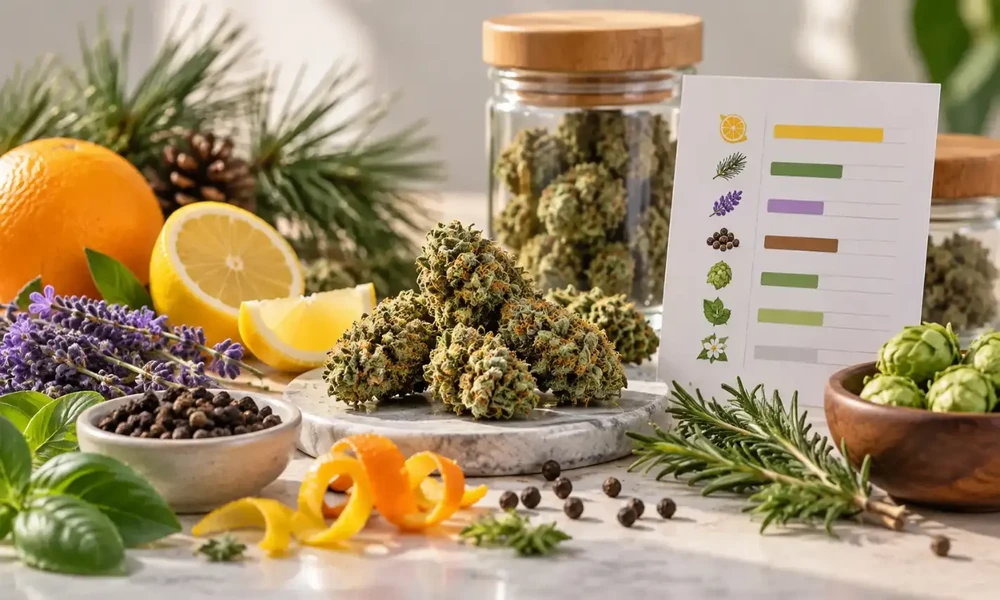
There is a small pause that happens when opening a jar of cannabis. The first thing noticed is often the smell. The all strains of weed can carry their own familiar scent patterns. Some remind people of citrus peel or fresh herbs. Others seem earthy, woody, sweet, or sharp. Paying attention to those small differences can make choosing between varieties feel less confusing.
Smell Often Starts the Comparison
Names can become confusing after a while. Scent feels more direct. A familiar aroma gives people something simple to notice before looking at detailed product information. One variety might have a soft herbal character while another carries a sharper citrus note. Neither description needs to sound complicated. Everyday words are usually enough.
Familiar Aromas Feel Easier to Remember
People tend to remember smells through everyday connections. A citrus note may bring back the smell of a freshly opened peel. A pine scent can recall a walk near trees. Herbal aromas might seem familiar from ordinary household plants.
Simple Notes Keep Comparisons Clear
Writing down a few words can help. Nothing formal is needed. A small note such as citrus, pine, or earth may be enough to remember a particular sample later.
This becomes useful when all strains of weed seem difficult to distinguish by name alone. Personal descriptions can make comparisons easier without turning the process into a technical exercise. The focus stays on observation.
A Quiet Routine Makes Things Easier
A consistent routine helps prevent rushed judgments. Start with the scent. Notice its strongest impression. Then look at the label and available product information.
A few simple habits can keep observations useful:
- Notice the first scent before checking product descriptions.
- Give several aroma notes simple everyday names.
- Compare samples under similar storage conditions whenever possible.
- Write down memorable scents for easier later recognition.
- Avoid treating aroma strength as proof of potency.
- Check labelled cannabinoid information separately from scent observations.
- Remember that personal smell perception can differ between people.
- Keep containers properly closed after making scent observations.
Aroma Alone Does Not Tell Everything
Smell can provide a useful point of comparison. It cannot confirm every detail about a cannabis product. Potency depends on cannabinoid content rather than aroma alone. Personal perception also varies from one person to another.
Storage matters too. Light, heat, moisture, and time can alter how certain scents appear. A familiar aroma may therefore seem weaker or different later. Looking at laboratory information and product labels alongside scent gives a fuller picture without making the process complicated.
Questions People Often Have
- Does a stronger smell mean stronger cannabis?Not necessarily. Aroma intensity does not reliably indicate cannabinoid strength.
- Can scent identify a variety by itself?No. Aroma can offer clues but cannot confirm a variety alone.
- Why do two samples smell similar?Different varieties can share several terpene compounds and produce similar scent impressions.
- Can storage change the natural aroma?Yes. Poor storage conditions can affect how clearly certain scents remain noticeable.
- Are terpene names necessary for everyday comparison?No. Simple descriptions such as citrus, earth, or pine can work well.
- Does everyone notice the same aroma?Not always. Personal perception can make scent descriptions differ between people.
Consistency Matters More Than Perfect Identification
Aroma is a quiet detail. It does not need to carry the whole decision. Paying attention to scent can simply make comparisons more understandable during ordinary routines.
Some days the difference may seem obvious. Other times two samples may appear surprisingly close. That is normal. Careful notes, similar storage, and steady observation offer a more useful habit than trying to identify every variety perfectly. A calm approach leaves room for those small differences without forcing certainty where none exists.
